

Custom magnet sizes run from sub-millimeter technical parts up to several hundred millimeters, but almost every home or promo order lands on one of a handful of proven dimensions: 2 x 2, 2.5 x 3.5, 3 x 4, 4 x 6, and 3.5 x 8.5 inches. Material and thickness set the real ceiling on how small or large a piece can go. Flexible sheet magnet works best for thin photo and text pieces, while neodymium suits small parts that need serious holding strength. If you already have an exact size in mind, come to your order with finished dimensions, thickness, and a proof step built in.
TL;DR:
- Most standard magnet sizes for home or promo uses are 2 x 2, 2.5 x 3.5, 3 x 4, 4 x 6, and 3.5 x 8.5 inches, with material and thickness setting size limits.
- Flexible sheet magnets are best for thin photos and text under 0.1 inch, while neodymium magnets deliver higher strength in smaller sizes, especially for mounting heavier objects.
- Custom shapes like die-cut designs and silhouettes cost more and require simpler interior details to prevent tearing or curling during handling.
- Providing precise finished dimensions, a detailed drawing or proof, and performance targets upfront speeds up ordering and ensures accurate results.
- Larger or non-standard magnets may need to be tiled or assembled from smaller pieces, and tight tolerances increase costs and lead times.
Table of Contents
- Custom Magnet Sizes: Standard Options and Shape Examples
- How Material, Thickness, and Grade Affect Size and Strength
- How to Specify Dimensions and Order Custom Magnets
- Size Limits, Tolerances, and What Vendors Will Ask
- Why Order Custom Magnets Through Faintest
- What the Size Question Actually Comes Down To
- Ready to Order? Here’s the Fast Path to Your Custom Magnet
- Sources
- FAQ
Custom Magnet Sizes: Standard Options and Shape Examples
Most people don’t need a custom magnet dimension at all. They need to know which standard size fits their photo, phrase, or event card, and that’s usually one of five shapes.
- 2 x 2 inches (square): the classic fridge magnet size, ideal for a single photo, a short phrase, or a logo mark.
- 2.5 x 3.5 inches (business card style): enough room for a headshot plus a line of text, or a short joke with a graphic.
- 3 x 4 inches: a common photo-frame ratio that works well for portrait shots or save-the-date announcements.
- 4 x 6 inches: the standard print photo size, a natural fit for gift magnets made from an existing print.
- 3.5 x 8.5 inches: a wide bookmark-style shape often used for panoramic shots, group photos, or longer text pieces.
Measuring each shape is straightforward. Rectangles and squares get a width by height measurement (always list width first). Circles need only a diameter. Ovals require both the major axis (longest point) and minor axis (shortest point). Whatever the shape, keep your artwork’s important text or faces at least a quarter-inch inside the trim line. This bleed and safe-area buffer keeps cutting variance from clipping a face or word.
Die-cut and custom shapes, like a state outline or a mascot silhouette, cost more than a standard rectangle because they require a custom cutting die or tighter laser-cutting setup. They’re worth the extra cost when the shape itself is part of the brand or joke. If you’re designing a die-cut piece, keep interior details simple. Thin, sharp points in flexible magnet material tend to curl or tear during handling.
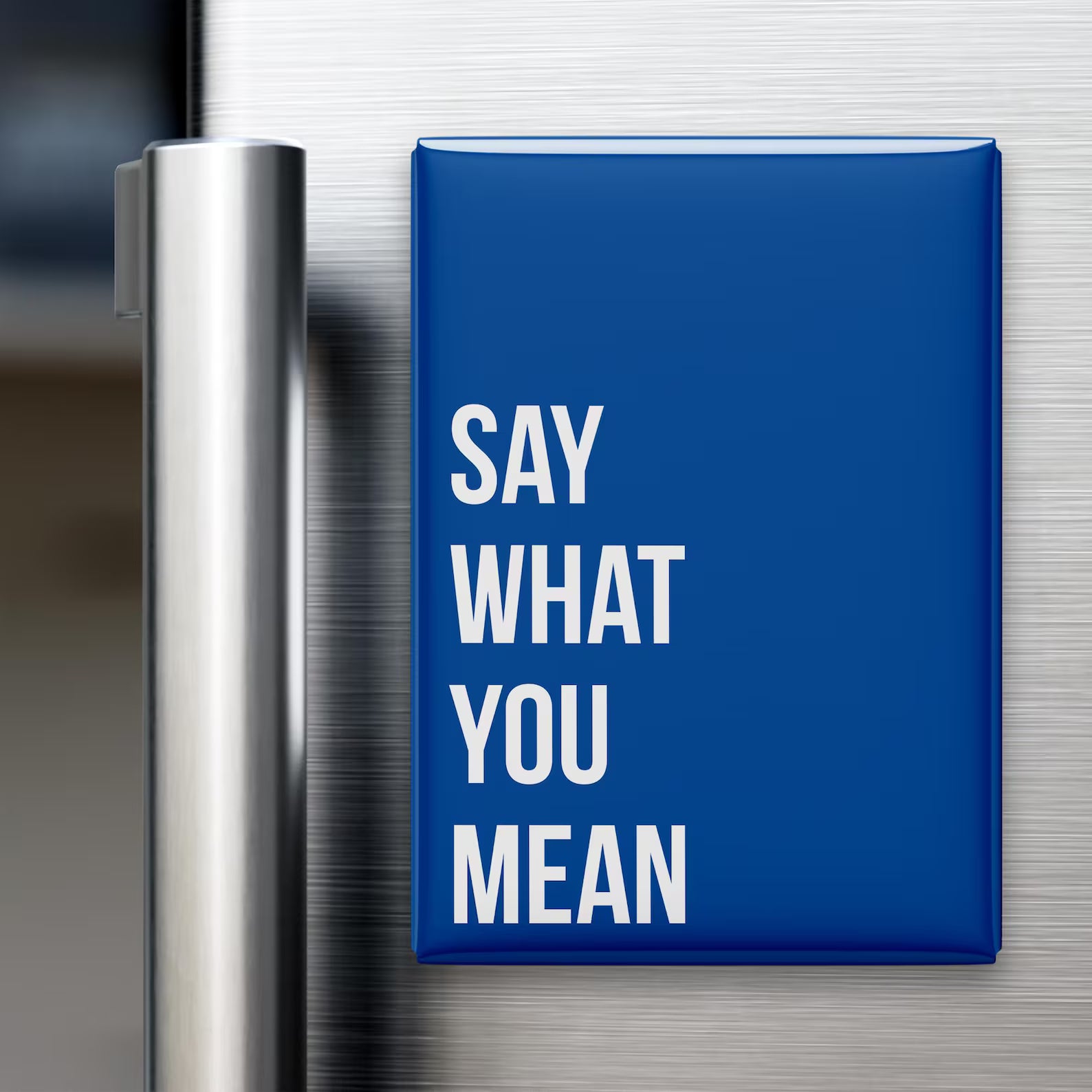
Mapping shapes to real products makes this concrete. A short phrase or logo fits neatly on Custom Text Magnets at 2 x 2 inches. A headshot with a caption fits the 2.5 x 3.5 inch text magnet format. Larger group shots or framed-style keepsakes suit the custom photo magnet line, which handles the 3 x 4 and 4 x 6 photo ratios well.
How Material, Thickness, and Grade Affect Size and Strength
Two magnets can be the same size and behave completely differently, because the material underneath decides how much holding power that size can actually deliver.
Flexible sheet magnet, sometimes called ferrite-loaded rubber, is thin, inexpensive, and easy to laminate with a photo or printed design. Most consumer photo and text magnets run at or under 0.1 inch thick. Neodymium, by contrast, is a rare-earth magnet that packs far more strength into a tiny footprint. Custom neodymium parts can be manufactured anywhere from 0.1 millimeters up to roughly 300 millimeters, with tolerances as tight as ±0.005 mm on micron-scale pieces. Some suppliers cap certain neodymium shapes at a 2 inch maximum in the magnetized direction, so very large high-strength pieces sometimes need to be built as assemblies of smaller magnets rather than one solid block.
Here’s the trade-off that trips people up: a large sheet of thin flexible magnet has more surface area but weaker hold per square inch than a small, thick neodymium disc. That difference matters when a magnet needs to support real weight, like a wall calendar or a metal sign bracket, versus one that just needs to stay put on a fridge.
- Choose flexible magnet for laminated photo or text pieces, anything under about 0.1 inch thick, or designs meant purely for display.
- Choose neodymium or a thicker ferrite block when you need strong hold in a small footprint, like mounting something on a metal cabinet.
- Check heat tolerance and coating before ordering anything for outdoor signage. Fridge magnets rarely face extreme heat, but a car magnet or patio sign might.
Pro Tip: If you’re not sure which material fits your project, describe the end use (fridge display, sign mount, gift) rather than guessing a material name. A good vendor will match material to function faster than you can research it yourself.
How to Specify Dimensions and Order Custom Magnets
Getting a fast, accurate quote comes down to giving a vendor everything they need up front instead of trickling it out over three email exchanges. Here’s the order to do it in.
- State finished dimensions, thickness, and tolerance. Write it like an engineer would: “2.50 x 3.50 in, ±0.5 mm thick.” For any non-circular or non-square shape, mark which face is north. Terms like axial or radial get confusing on blocks and rings, so labeling the actual face removes any guesswork.
- Attach a drawing. A 2D drawing or 3D STEP file is the gold standard for accuracy, but if you don’t have CAD software, labeled photos or a hand sketch with dimensions written on it works too. Note your quantity and where the magnet will be used.
- Add performance targets if they matter. Pull force or surface field figures help a vendor pick the right grade. If you don’t know these numbers, just give a maximum size envelope and let them optimize.
- Confirm proofs, finish, and lead time. Ask for a digital proof before production, specify any coating needs, and request standard tolerance unless your application truly needs something tighter.
| Step | What to provide | Why it speeds up your quote |
|---|---|---|
| 1. Dimensions | Finished size, thickness, tolerance, north face marking | Removes ambiguity on shape and orientation |
| 2. Drawing | 2D/STEP file, or labeled photo/sketch | Lets the vendor confirm geometry without back and forth |
| 3. Performance | Pull force, surface field, or max envelope | Helps match material grade to your actual need |
| 4. Approval | Proof step, finish/coating, lead time expectation | Avoids surprises before the run goes to production |
A spec panel that covers dimensions, tolerances, magnetization direction, and operating temperature up front is what separates a same-day quote from a week of clarifying emails.
Size Limits, Tolerances, and What Vendors Will Ask
Every material has a manufacturable range, and knowing it before you finalize a design saves a redesign later.
Tolerance bands vary by process. Ground neodymium parts can hit ±0.05 mm, while standard production tolerance runs ±0.1 mm to ±0.3 mm depending on the supplier and finish. Flexible sheet magnet has wider tolerance bands than rigid magnet material, simply because it flexes and shifts slightly during cutting.
- Minimums: die-cut flexible magnets have a practical floor on thickness and on interior cutout size. Push a design below that and edges tend to tear during production.
- Maximums: flexible sheet stock comes in fixed roll widths, so very large single pieces usually mean multiple panels tiled together rather than one continuous sheet.
- Odd sizes cost more: anything outside a standard catalog dimension usually means a new die or cutting setup, which adds cost and a few days of lead time.
- Tight tolerance costs more: requesting ±0.05 mm when ±0.2 mm would work fine adds inspection time and scrap rate, both of which show up in price.
Ask for standard tolerance by default. Reserve tight tolerance requests for pieces that genuinely need to fit a slot, bracket, or another manufactured part.
Why Order Custom Magnets Through Faintest
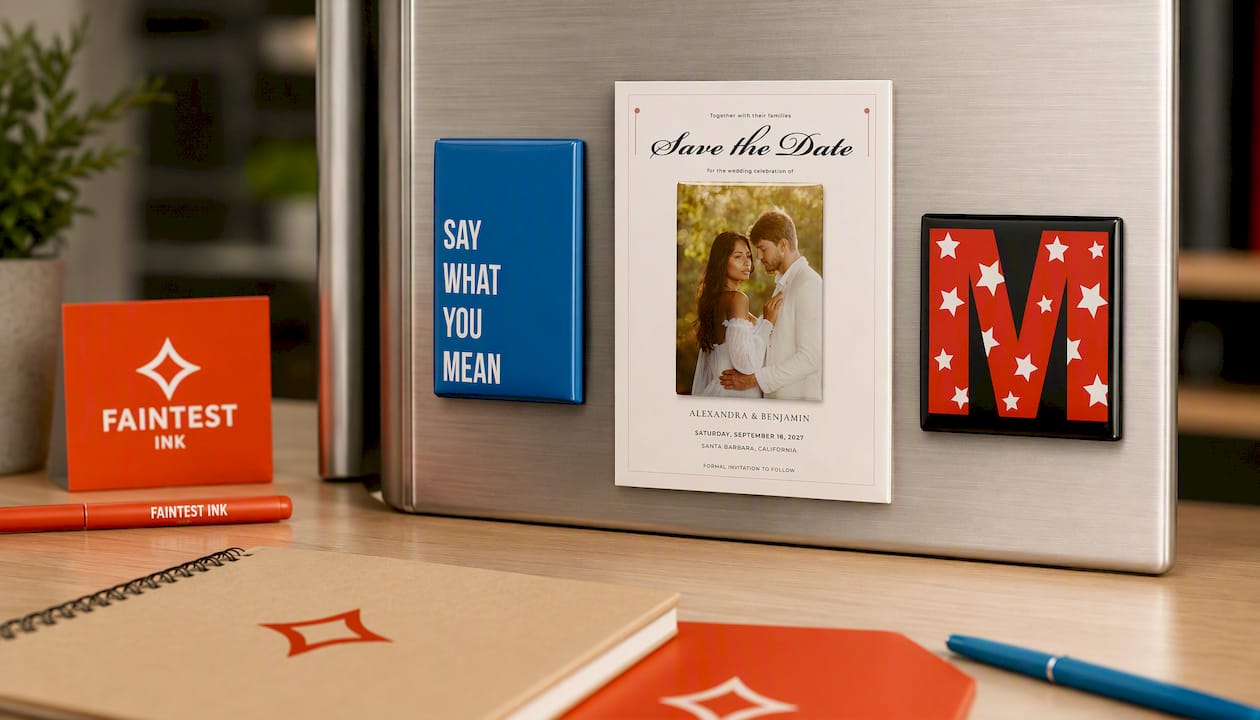
Faintest built its process around exactly the sizing questions above, and its lineup covers the three shapes people ask for most. The Custom Text Magnets - 2.5 x 3.5 Inch suit a phrase, quote, or small logo piece. The Save the Date Magnets with 5 x 7 Cards pair a magnet with a matching printed card for wedding announcements, sized to slide straight into a standard envelope. And the Colorful Alphabet Magnet – M gives customers a single-letter novelty piece for spelling out names, initials, or inside jokes on a fridge or magnetic board.
Every custom order at Faintest goes through an art proof before production starts. You upload your image or text, review a digital proof, request any revisions, and approve the final version before it ever reaches the printer. That single approval step is what catches a cropped face or a misspelled word before it becomes a finished product instead of after.
What the Size Question Actually Comes Down To
Most people overthink the size decision and underthink the material decision. The real question isn’t “what’s the biggest magnet I can order,” it’s “what does this magnet need to do once it’s on the fridge or the gift table.” A 2 x 2 inch flexible magnet and a 2 x 2 inch neodymium disc are the same footprint on paper and completely different objects in practice.
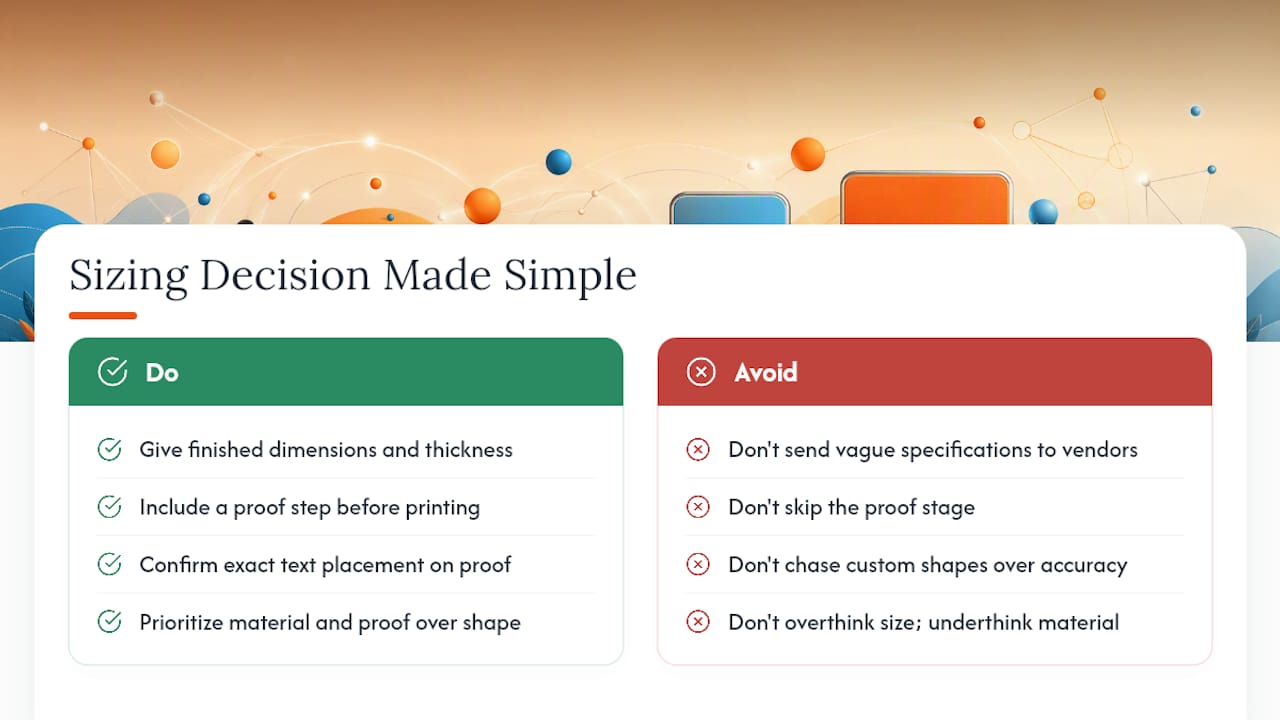
The conventional advice, pick a size and go, skips the part that actually determines whether your order looks right the first time: giving finished dimensions, thickness, and a proof step before the file goes to print. Vendors aren’t guessing at what you want. They’re working from whatever specificity you hand them, and vague specs are the single biggest reason orders need a second round.
If you’re ordering for a wedding, a gift, or a promo run, prioritize getting your exact size and text placement right in the proof stage over chasing a nonstandard shape. A clean 2.5 x 3.5 inch rectangle with a sharp proof beats a custom die-cut shape with a rushed one, every time.
— Faintest
Ready to Order? Here’s the Fast Path to Your Custom Magnet
Faintest turns a photo or a phrase into a finished magnet without asking you to learn magnet engineering first. You pick a size, whether that’s a straightforward 2 x 2 inch text magnet or a full save-the-date suite with matching cards, upload your artwork, and Faintest builds a proof for your approval before anything goes to production.
That proof step is the part most competitors skip, and it’s the reason orders come out matching what customers actually pictured. Start with the custom photo magnet page if you’re working from an existing print, or head straight to text magnet options if your project is more phrase than photo. Either way, review your proof, request changes if needed, and approve the final version. Faintest reviews every custom order for quality before it goes to print, so what you approve is what arrives.
Sources
- Precision Custom Neodymium Magnets: Engineering Support & Fast Prototyping
- Magnet RFQ Builder — Radial Magnets
- Custom magnet ordering process — Mainrich Magnets
- Custom Magnet Manufacturing - GUK Magnetics
FAQ
What sizes do custom magnets come in?
Standard consumer sizes run from 2 x 2 inches up to 3.5 x 8.5 inches, while technical neodymium magnets can be manufactured from 0.1 millimeters up to roughly 300 millimeters depending on grade and application.
Where can I find custom-sized magnets?
Faintest offers standard sizes like the 2.5 x 3.5 inch text magnet and photo magnets ready to order, plus a proof step for any custom dimension you specify.
What sizes do magnets come in for photos and events?
Photo magnets commonly come in 3 x 4 and 4 x 6 inch ratios matching standard print sizes, while event magnets like save-the-date kits typically pair a smaller magnet with a 5 x 7 inch printed card.
Where can I find large custom magnets?
Larger custom pieces, generally above 8.5 x 11 inches, often require tiled sheet magnet or an assembled panel rather than one continuous piece, since flexible stock comes in fixed roll widths.
How much do custom text magnets cost?
The 2.5 x 3.5 inch custom text magnet is priced at $12 per magnet on the Faintest site.